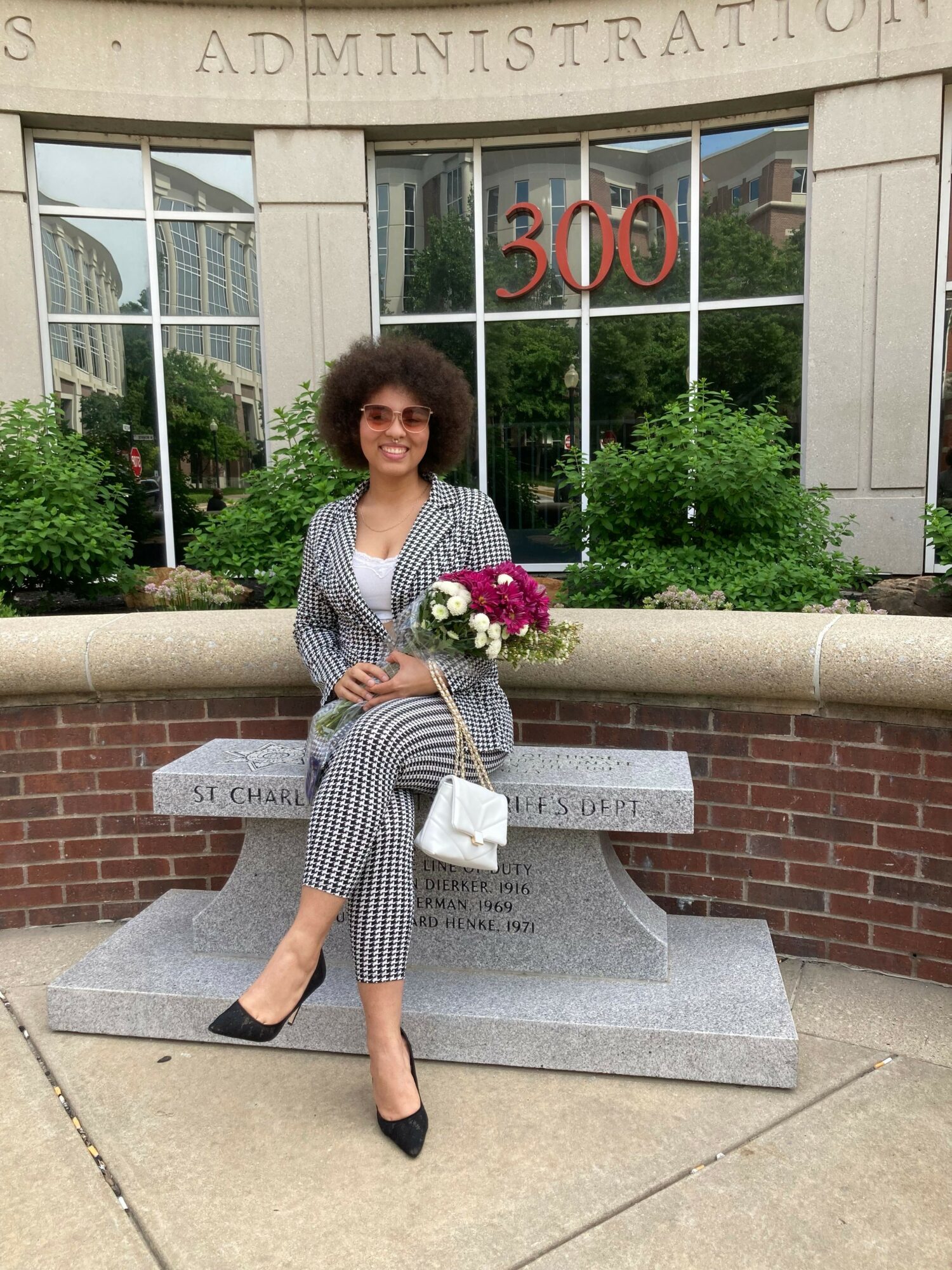
Today we’d like to introduce you to Aaliyah Bailey.
Hi Aaliyah, can you start by introducing yourself? We’d love to learn more about how you got to where you are today?
My work explores how people communicate with each other, how the systems around impact our behavior around communication, and increasingly the role of technology in that connection.
I started my career working in social media and understood quickly that the way people communicate online and behave IRL changes depending on the communications environment, including considering the information, relationships, resources, and infrastructure they have access to. Over the years, my work expanded beyond digital communications and marketing into behavioral research that asked what do people pay attention and how do they act because of it. I became especially interested in the relationship between human behavior and technology, and how attention in the digital world has become a currency itself.
I founded the Center on Rural Parenting (CRP), a rural Reproductive Justice initiative focused on creating safe and sustainable rural communities and parenting environments through historical storytelling, communications capacity building and technical assistance, and research, because rural communities deserve attention. I wanted to fight back against common narratives that I hear about who we are as rural folks. There are good folks fighting for justice in rural communities from all areas, in healthcare and education access, strengthening our built environment and physical infrastructure, and creating workforce initiatives to support workers. CRP aims to be the microphone that amplifies that work to funders, policymakers, the general public and beyond.
I’m was born and raised in the St. Louis region, but my family has roots in Arkansas and greatly influenced the Blackroads Project, the historical storytelling project from which CRP was born that focused on the development and movement of Black communities in the Midwest. The Greater Memphis region is a place where rural and urban communities, culture and commerce, history and innovation constantly intersect. Living just across the river in Marion has kept intentional regional collaboration front and center. The Mississippi River continues to serve as a connection between states and communities with shared histories and challenges here in the Delta in a similar way that it does between St. Louis and Southern Illinois, where my story began.
Today, I’m continuing to build CRP and its broader learning and capacity-building work while exploring how emerging technologies can help communities communicate, learn, organize, and tell their own stories more effectively. I’m particularly interested in what becomes possible when we pair technological innovation with deep community knowledge rather than asking communities to adapt themselves to technology.
At this stage, the Center on Rural Parenting is interested in helping rural-serving people and organizations build the infrastructure that helps connect, communicate and create content that people pay attention to.
Can you talk to us a bit about the challenges and lessons you’ve learned along the way. Looking back would you say it’s been easy or smooth in retrospect?
Fighting against common narratives and misconceptions of rural communities is the biggest hurdle to overcome. CRP started with the Blackroads Project, a short series available on YouTube, which asks the question of what are rural communities and where are they? Who lives there, who doesn’t and why? What’s happening in rural communities today and how can the efforts by folks who live there be supported?
Another challenge has been getting people to see rural people as assets, and rural communities as opportunities more than places that need to be “served.” I believe the future of work is rural and the future of rural work is remote and technology driven. Rural communities have tremendous knowledge, creativity, cultural assets, and problem-solving capacity, but they are often left out of conversations about innovation because innovation is still too often associated with large cities, universities, or technology companies.
That’s why it’s important for the Center on Rural Parenting to support communications capacity-building and technical assistance for rural-serving organizations: so we can tell our own stories, articulate what we do and bring attention to our work. I want to bring rural communities to the front of conversations about the future. I’m particularly interested in what happens when we bring technology, communications, research, and AI innovation into rural communities in ways that strengthen existing knowledge and relationships instead of replacing them.
I’ve also learned that the rural-urban divide is much less rigid than we sometimes make it seem. Moving to the Memphis area has made that especially clear to me. Memphis is deeply connected to communities across the Mississippi River and throughout the Delta, and there is enormous potential for collaboration between urban institutions and rural communities between Arkansas, Mississippi, Missouri, and beyond.
CRP creates the bridge, language and infrastructure to connect people who are often placed in separate categories—rural and urban, technology and community, research and lived experience. Innovative, hardworking in folks in rural communities already exist; we only need the attention on the work we’re doing and to have a stronger voice in shaping what technology, innovation, and regional collaboration look like in the first place.
Appreciate you sharing that. What else should we know about what you do?
At its core, my work is about understanding how people communicate, connect, and behave—and how technology and the systems around us shape all three.
My background is in digital communications and public health, but my work has grown well beyond traditional communications into human-technology behavioral research. I specialize in the space where human behavior, technology, storytelling, and community development overlap. That includes behavioral and communications research, AI innovation, digital strategy, and community capacity-building.
The Center on Rural Parenting (CRP) is where much of that work comes together. Through CRP, I focus on rural Reproductive Justice, rural storytelling, community infrastructure, and helping rural-serving organizations develop the capacity to communicate, collaborate, and create change on their own terms. The Blackroads Project was particularly important to that evolution because it pushed me to think more deeply about the relationship between history, identity, economic opportunity, and the stories communities tell about themselves.
What I’m most proud of is building work that connects things that are usually kept in separate boxes. I can move between a community conversation, a research question, an organizational strategy, and a conversation about AI and technology—and see the relationships between them.
I think that perspective is also what sets me apart. I see the connection between people, systems and infrastructure that undergirds community to ask: How does information move? What gets people’s attention and how is that attention monetized? Who gets included? What behaviors do our systems encourage? And how can we design those systems so communities have more agency?
That perspective has also shaped how I think about rural-urban, cross-state and regional collaboration. I’m particularly interested in the possibilities for rural-urban collaboration across the Mississippi River, where cities like St. Louis and Memphis can serve not as a dividing line between urban and rural communities, but as a hub connecting people, ideas, institutions, and resources across the region.
Ultimately, I’m trying to build things that help communities become more capable—not simply more visible. That’s the work I’m most proud of.
If we knew you growing up, how would we have described you?
I was a curious and observant kid, and I think a lot of that came from the way my father taught me about history. He introduced me to a version of the Midwest that was much more complicated than the one I encountered in school, explaining how so-called “freed states” imported the labor of enslaved Black folks, incorporated laws that forced us to hide our hair and prevented us from living within city limits, and tore apart families through incarceration and forced relocation. I’ve always known that the narrative that rural communities consisted of tight-knit white farmers was a myth, and picture painted with racial violence as the brush, paint and paper. As I got older, I started actively searching for those missing pieces: learning more about the communities, people, and histories that shaped the Midwest but weren’t always visible in mainstream narratives. But what happens when people can’t read the story?
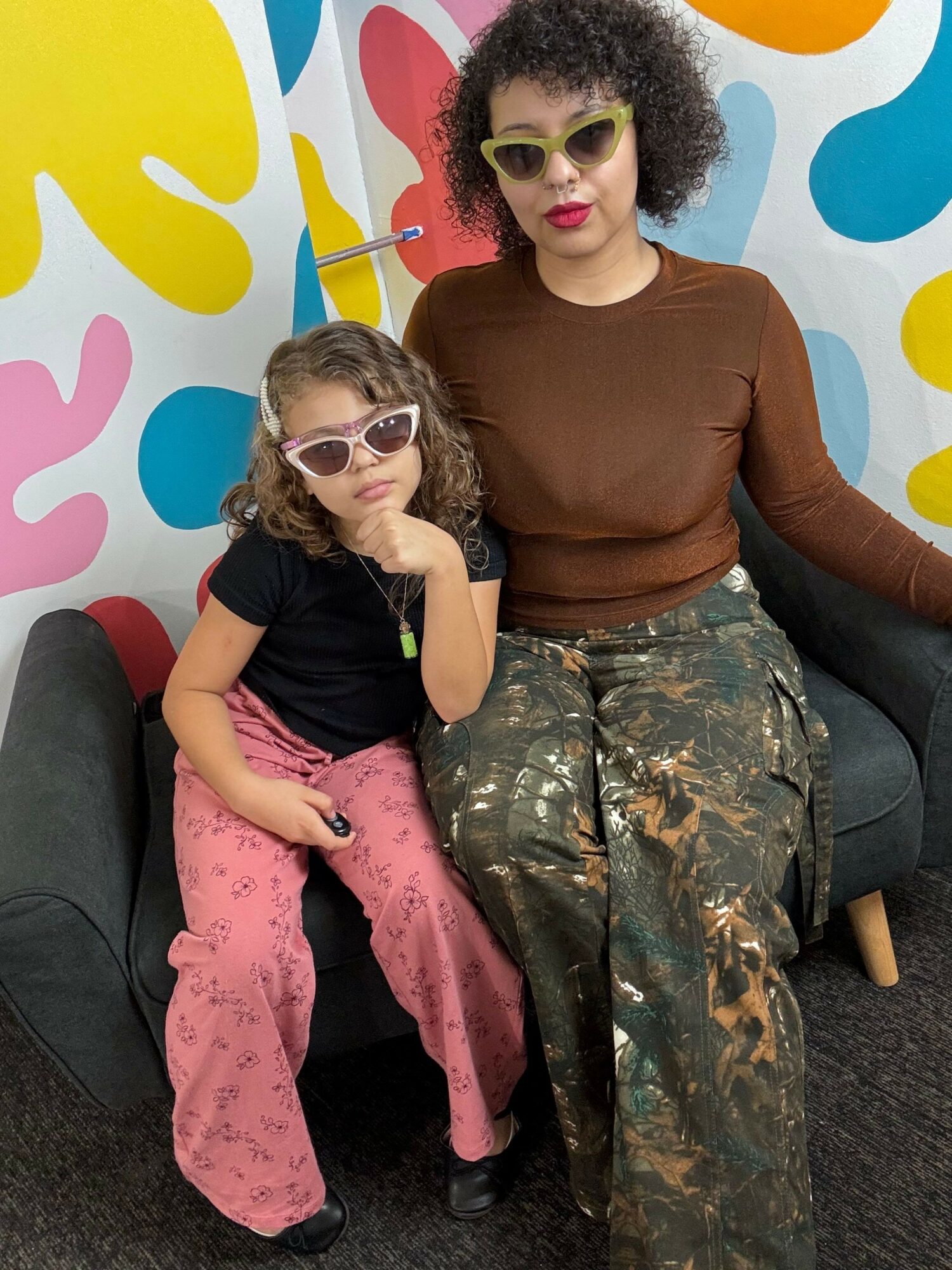
Now, I’ve passed down my curiosity, love for learning and passion for reading to my daughter, A’miyah. A’miyah is a driving force behind the development of Community Digital Awareness (CDA) for The Center on Rural Parenting. CDA is a working framework that acknowledges the quickly changing digital environments children are facing and increasing community capacity to understand these environments and supporting trusted adults that help keep children safe online. Our children have used technology for a long time now, but as technology advances, especially with AI innovation, they aren’t just building relationships with other people on online – they’re building relationships with the technology itself.
The basic foundation of CDA is literacy – the ability to read, comprehend and apply meaning in the appropriate context.
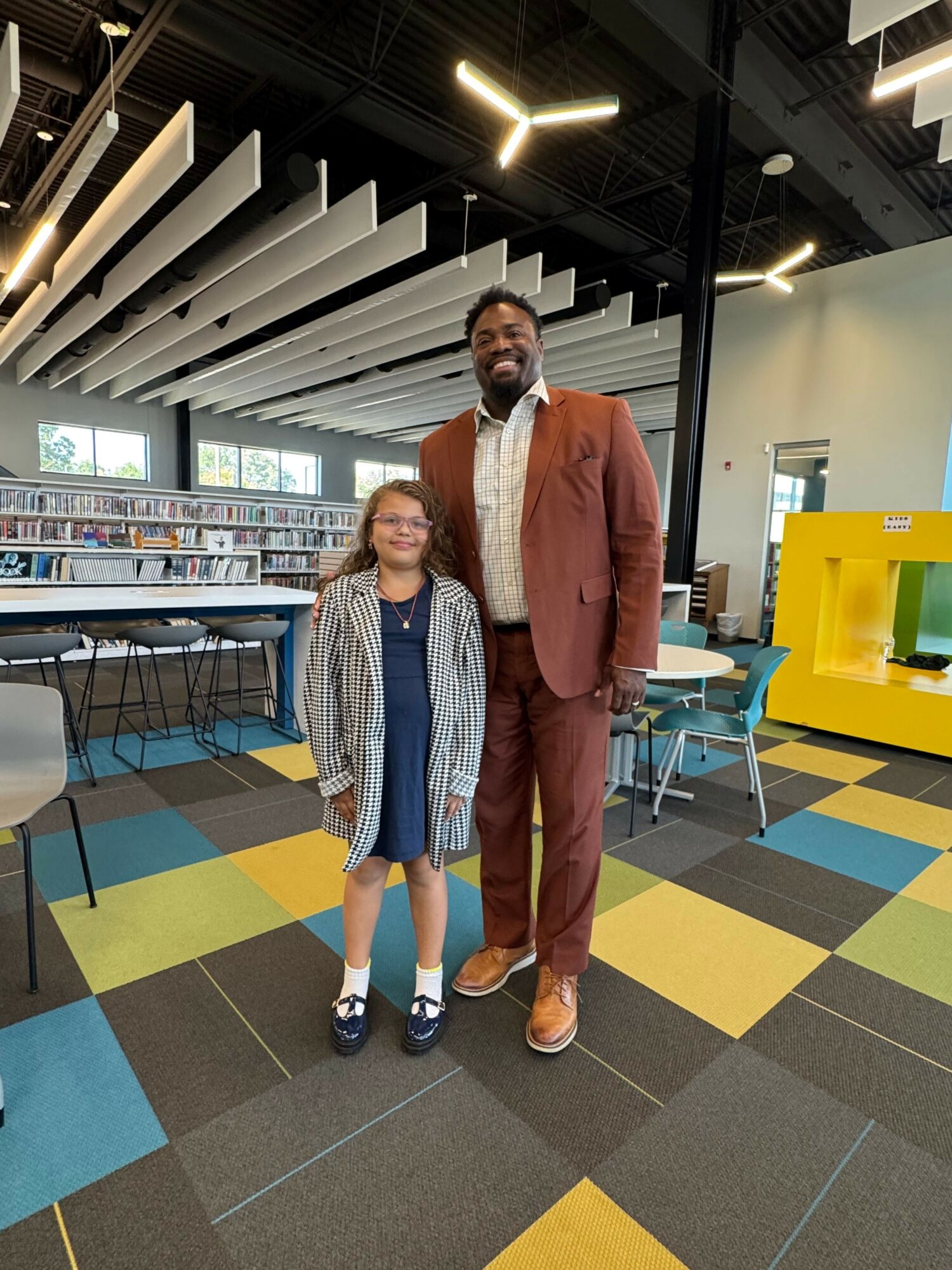
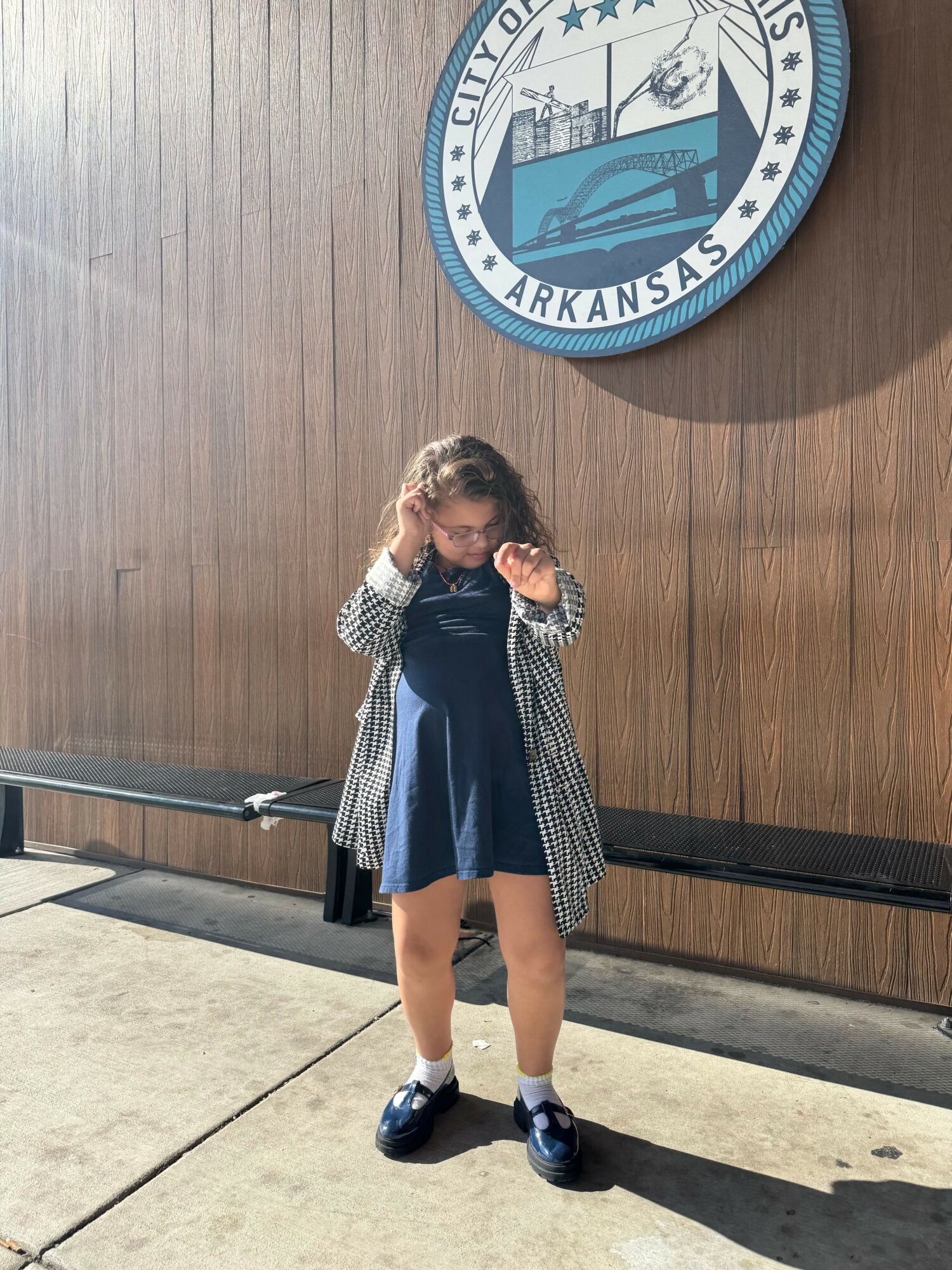
An early reader herself, A’miyah has always been passionate about books and reading to her friends and classmates. After meeting our State Representative Jessie McGruder at a mayoral forum for the City of Marion Arkansas, I explained to her that he was a teacher and a champion for literacy. After playing Ruby Bridges in a play at school last year, she has been increasingly interested in teaching her peers and classmates how to read, so she asked to meet him, ask about his work and how she can get involved.
She prepared her notes, practiced her questions and conducted a successful interview while learning more about our schools and libraries, and brainstorming ways to make reading fun for kids in our community. We were also able to speak with the folks at the City of West Memphis public library to learn more about their children’s programming.
A’miyah is demanding a fair, age-appropriate and safe digital environment for herself and her peers, and doing the work to make sure it happens. I can’t end this post without emphasizing how proud I am of her. She demonstrates why our children and the youth of our community sit at the center of the mission for CRP and what children can do when they grow up in safe and sustainable environments, and how parents and the trusted adults in our communities can give them the confidence, access and attention to bring their vision for the future to life.
Contact Info:
- LinkedIn: https://www.linkedin.com/company/the-center-on-rural-parenting/
- Youtube: https://youtube.com/playlist?list=PL8yPPucgdv4TBM5U1bx3B0hqS3aujiWpR