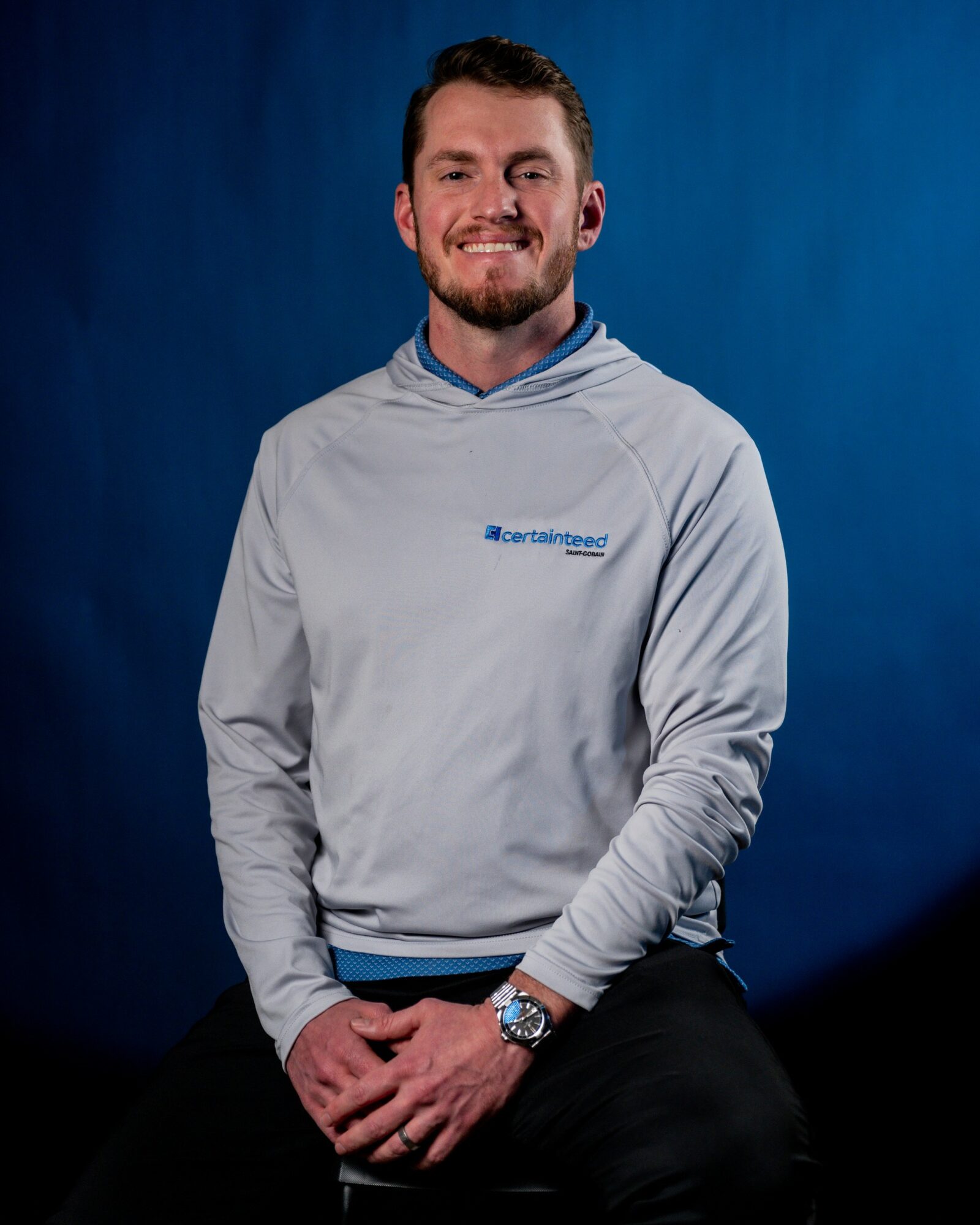
Today we’d like to introduce you to Trey Stafford.
Trey, we appreciate you taking the time to share your story with us today. Where does your story begin?
I didn’t start Cool Roofs, but my path into the company is a big part of the story. Back in 2017, I quit my job on a whim with no real plan other than wanting to learn business the hard way. I spent the next few years as a solo entrepreneur—consulting on marketing, operations, and helping a friend sell web and mobile app projects. That season taught me how to think, how to solve problems, and how to build without a safety net.
I joined Cool Roofs in 2021, when it was still operating like a small mom-and-pop roofing company. My role from day one was simple: turn it into a real, scalable business. I leaned on tech, systems, leadership development, and building a strong internal culture. Those moves are what unlocked the growth. Since then, we’ve doubled year over year, expanded across Texas and into Tennessee, and we’re preparing to enter New Mexico, Arkansas, and the Southeast.
Today, Cool Roofs is a multi-state roofing and solar company with big goals and a team that’s bought into the vision. My story is really about stepping into something that had potential and putting structure, people, and technology behind it so it could grow into what it’s becoming now.
I’m sure it wasn’t obstacle-free, but would you say the journey has been fairly smooth so far?
Not even close to a smooth road. When I joined the company in 2021, Cool Roofs had heart, but it didn’t have structure. There were no real systems, no processes, limited accountability, and the business was basically held together by hustle and hope. Turning that into a scalable operation brought every kind of challenge you can imagine.
The first battle was cultural. Any time you introduce structure, technology, and expectations into a mom-and-pop environment, there’s resistance. People who were used to doing things a certain way don’t always adapt quickly—or at all. We had turnover. We had to rebuild roles. We had to reset standards. That’s never easy.
Then there’s the operational grind: implementing new tech stacks, fixing broken workflows, building a recruiting pipeline, stabilizing cash flow, and learning to manage growth without letting it wreck the customer experience. We doubled year over year, which sounds great on paper, but hyper-growth is messy behind the scenes. It exposes every weakness at once.
We also expanded into new states while still maturing as a company, which forced us to grow up fast. Licensing, compliance, staffing, leadership depth—none of that builds itself.
But the struggles became the fuel. Every challenge forced us to get sharper, more intentional, and more disciplined. None of the growth we’ve had was accidental. It came from solving problems in real time and refusing to let chaos stay chaos.
Alright, so let’s switch gears a bit and talk business. What should we know about your work?
I’m the VP of Operations at Cool Roofs, and my work sits at the intersection of operations, technology, finance, leadership development, and brand strategy. My role is to build scalable systems, streamline decision-making, and create an operational structure that supports real growth across multiple states and business units.
What I really specialize in is turning vision into execution. I take big goals—expansion, new divisions, revenue targets—and translate them into clear processes, technology stacks, financial models, org charts, and day-to-day behaviors that people can actually run. I’m constantly building automations, designing workflows, developing leaders, and implementing tools that make our team faster, more accurate, and more accountable.
Finance plays a major part of my world. I work closely on forecasting, budgeting, cash flow stability, job costing, commission structures, and figuring out how to scale responsibly without losing momentum. A lot of the company’s growth has come from tightening the numbers, understanding the levers that drive profitability, and aligning our structure around those metrics.
I’m probably best known for creating clarity. Roofing and solar are naturally messy industries, but when you build the right systems and invest in people, you can create a business that performs consistently and grows with intention. That’s what I’m most proud of—watching the company evolve from a small local operation into a multi-state organization with a real identity, strong culture, and the infrastructure to support long-term expansion.
What sets me apart is my background. I didn’t come up in contracting. I came up as an entrepreneur and operator, which means I approach everything—from tech to leadership to financial discipline—through the lens of building something that lasts. I think in frameworks, I move fast, and I believe in developing people just as much as I believe in building systems.
At the end of the day, my job is to build the engine that powers the growth. That’s what I love doing, and that’s what I’m committed to scaling as we enter new markets and take on bigger goals.
Is there any advice you’d like to share with our readers who might just be starting out?
My advice for anyone starting out is this: success isn’t complicated, but it absolutely requires discipline. One of the most impactful things I ever learned came from Coach Michael Burt, who told me, “Long discipline in the same direction is how you reach success.” It took me years to actually apply that. Until I did, success felt unpredictable. Once I committed to disciplined action over long periods of time, everything changed.
Another mentor of mine, Bob Willumsen, taught me something that reshaped how I lead: “Growth requires solving bigger problems, and on the other side of every solution is a larger problem.” Once I accepted that, I stopped being surprised by challenges and started seeing them as signals that we were moving in the right direction.
A few other principles I wish I understood earlier:
1. Most people quit too early.
Tony Robbins said it well: “We overestimate what we can do in a year and underestimate what we can do in five.” If you stick with something long enough, momentum becomes your best friend.
2. Your habits determine your trajectory.
Jim Rohn’s words—“If you don’t run the day, the day will run you”—are painfully true. Systems, routines, calendars, and structure matter more than motivation.
3. Direction matters more than speed.
Another Jim Rohn line I live by: “It’s not the direction of the wind, but the set of the sails.” You can’t control everything, but you can control how you respond and where you aim.
4. Success is earned in the boring reps.
The small things you do every day—showing up, communicating well, learning new skills, pushing into discomfort—compound faster than you think.
If I could give one piece of advice to my younger self, it would be this: trust the process, trust your potential, and trust in the Lord through it. The path isn’t supposed to be easy. It’s supposed to shape you.
Contact Info:
- Website: https://www.coolroofs.co
- Instagram: https://www.instagram.com/realtreystafford
- LinkedIn: https://www.linkedin.com/in/treystafford/
- Youtube: https://www.youtube.com/channel/UC2j8NToi59AF6Gq5_kROjRw
- Other: https://maps.app.goo.gl/5361mCKBm5fQkDG49