
Today we’d like to introduce you to Kathryn and Russell Bush.
Hi Kathryn and Russell, so excited to have you on the platform. So before we get into questions about your work life, maybe you can bring our readers up to speed on your story and how you got to where you are today.
Ten years ago, we introduced Dry Hollow Farm as a small agricultural enterprise on 63 acres in western Tennessee. Our focus became raising dairy goats and organic herbs for the creation of personal care products. We are committed to eco-friendly agricultural practices as we offer artisan-crafted goat milk soaps, herbal salves, herb-infused oils, and dried herbal teas.
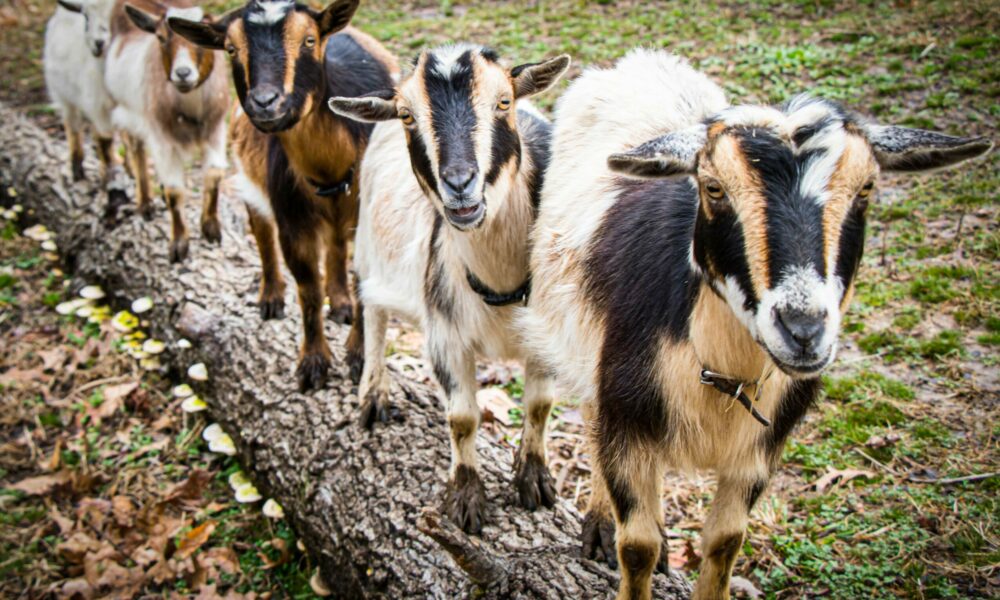
We primarily raise registered Nigerian Dwarf and Alpine dairy goats, though farm visitors also may encounter a passel of free-range chickens or Great Pyrenees livestock guarding dogs as they tour the farm. Guests who choose to visit spend time in the Soap Shop and Herb Shack, or stay even longer by reserving one of our two Amish-built cabins available through Airbnb.
Creating an agribusiness on a small, family-owned farm is a step-by-step process. Development is slow and thoughtful as each season we explore new ideas for expansion, or ways to tweak old ones, and is dependent upon nature’s ebb and flow. We began with a house and dilapidated century-old barn, and over time have added almost three miles of fencing, multiple animal shelters, two greenhouses (including the Herb Shack), a Soap Shop, a renovated barn, and two picturesque cabins.
Can you talk to us a bit about the challenges and lessons you’ve learned along the way? Looking back would you say it’s been easy or smooth in retrospect?
Developing our own agricultural business required a fair degree of trial and error and a willingness to constantly assess what works and what doesn’t. One of the challenges in an agricultural business is accepting the length of time it takes to bring any idea to fruition. All activities are seasonal, and if things “don’t go as planned,” we must patiently wait for a year to pass before the opportunity arises once again. This requires great patience as it is impossible to hurry animals or plants along!
Another challenge when pursuing an agricultural enterprise is the willingness to continue working no matter your personal feelings, health considerations, or the weather! We have shivered while milking our dairy goats in predawn, sub-freezing weather, mended fences in pouring rain, delivered goat kids after midnight, fed bottle babies every two hours day and night for weeks at a time, and hauled hay in above-1oo temperatures.
Within 48 hours of knee surgery, I’ve stood on crutches in the middle of the pasture clearing the lungs of a newborn goat kid, and I’ve cleaned water troughs when I’ve been too weak to stand from battling some random virus. I’ve had a neighbor call me early morning to let me know some of our livestock escapees are peering into her kitchen through the screen door, and I’ve rushed home in the middle of a windstorm to find a decades-old oak tree crashed through one of the primary fences, our animals curiously peering through the gap, contemplating their escape.
My husband Russell and I have a ready response – “Never a dull day here at Dry Hollow Farm!”
Thanks – So what else should our readers know about your work and what you’re currently focused on?
In addition to Dry Hollow Farm, I am a World Language teacher in our local, rural high school. I greatly enjoy introducing students to both sides of my life, the classroom, and the farm, and encourage our students with agricultural interests to examine and experience our farm model.
In addition to my personal classroom duties, I speak to our Economics students about entrepreneurship and introduce our local FFA students to animal experiences such as babysitting bottle-fed goat kids who come to school with me for the day, vaccinating, and other newborn care. We discuss creating an agribusiness with value-added products and investing in agritourism because we believe exposure to and experience with real-world career opportunities is one key to student post-graduation success.
Risk-taking is a topic that people have widely differing views on – we’d love to hear your thoughts.
Entrepreneurial activities require an acceptance of risk. Although financial risks are obvious, creative risks often are felt more deeply. For example, we have invested time and energy in creating products that seem like wonderful innovations to us, only to discover they sit on shelves (real and virtual) unsold.
Eventually, we admit defeat and remove them from inventory. When we are the artisan or creator, we present our ideas knowing our customers may not mirror our enthusiasm. We understand that every venture carries the risk of failure and through these failures, we grow – but sometimes this growth hurts just a little!
Additionally, every venture also carries the risk of listening to the voices of people who doubt our chances of success. As the years at Dry Hollow Farm passed and we explored different avenues for expansion, we heard many people question our wisdom (and mental acuity!). “No one will come to this small, rural area to stay in an Airbnb.” “Why are you making goat milk soap?” “Are herbs a good idea when everyone else is growing peppers and tomatoes?”
In many ways, we have yet to discover the outcomes of our risk-taking. However, when I watch a newborn goat kid standing for the first time, smell the spicy fragrance of an herb garden filled with Thai basil ready for harvesting, or share a personal story with a visiting cabin guest, I believe we already have our reward.
Contact Info:
- Website: www.dryhollowfarmtn.com
- Facebook: https://www.facebook.com/dryhollowfarmtn/
- Instagram: @dryhollowfarmtn