
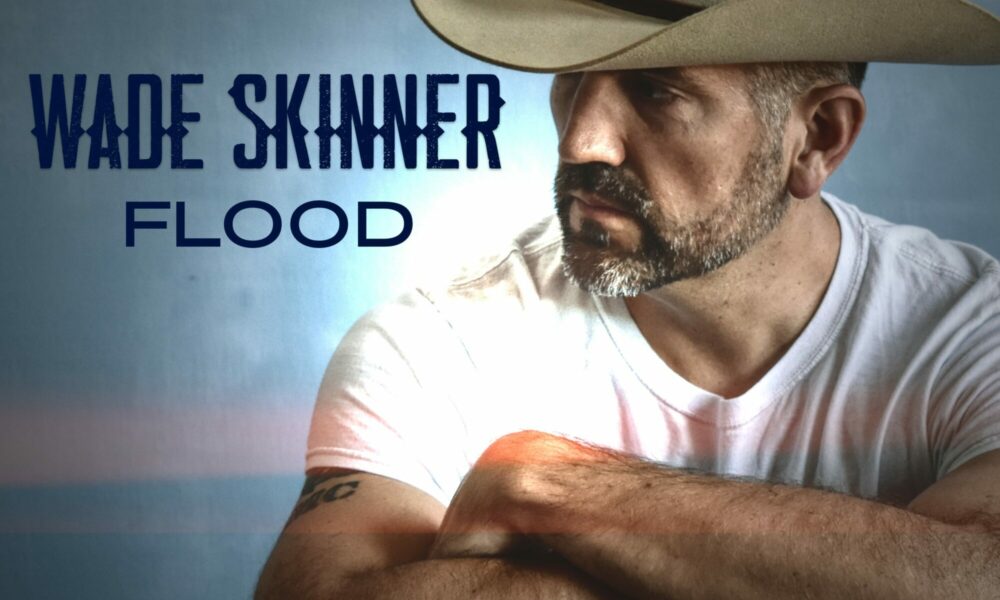
Today we’d like to introduce you to Wade Skinner.
Hi Wade, so excited to have you with us today. What can you tell us about your story?
I don’t really remember when I started playing music. All I know is that I was a child of about 5 or 6 when I started playing guitar. Music was a part of my growing-up years. My dad played and sang country and gospel music. And there was always a guitar sitting around the house. I took piano lessons as a kid and played hymns at church here and there. In school, I was always in choir even through college. At family gatherings there was always bluegrass, country, and gospel music; people sat in circles and played and sang. My uncle and dad were avid country musicians, so I learned all of the classic country songs by Merle, Waylon, Johnny, and George Jones before I knew who they were. My dad said I was singing Gene Watson as a toddler. As a teenager, I picked up drums and bass guitar. I played guitar and bass in a couple of college worship bands.
The songwriting piece did not come until later in my life. I suppose I needed more experience under my belt, and I suppose I needed to be broken. I was in my thirties before I started writing songs that were worth playing in front of other people, and I don’t think it is a coincidence that I started writing songs after my divorce. Songwriting was an outlet for making meaning out of my life. It still is. Somewhere along the way, people started clapping more for the songs I had written than the songs I was covering, so I kept writing and kept performing. Now, writing a song is about as easy as breathing. It’s just a natural part of my life. I do it because it’s who I am.
Would you say it’s been a smooth road, and if not what are some of the biggest challenges you’ve faced along the way?
There’s nothing smooth about the music business. The coronavirus shutdowns were huge for the music industry because the powers that be decided that music wasn’t essential. Just when we felt like we were gaining momentum, everything stopped. Hell, the whole world stopped. We had about twenty shows canceled overnight. Regaining momentum was tough after that. Some of the venues we had booked never booked us again – either because the contact we had at the venue stopped working there or because the venue stopped booking live music. It wasn’t a matter of simply picking back up where we left off after all of that.
It was slow and frustrating at times. We did the best we could through all of the lockdowns; we played live internet shows, but they simply were not the same as seeing people face to face. I wrote two of the songs for my second album during those lockdowns (including the title track for the album), so I guess I can’t be too upset about it all. Besides the coronavirus lockdowns, I have endured all of the struggles typical for every musician serious about this business: I’ve been screwed over by radio promoters and booking agents, and people just trying to make a quick buck. I had a serious car accident that resulted in shoulder surgery on my left shoulder. That surgery kept me out of the game for a while. And then there’s every musician’s dreaded five-letter word: money. There’s never enough of it when you need it the most.
Money makes it all go and when you don’t have it you are at everyone’s mercy. All of this is just life, I know. We live and learn and do the best we can as traveling troubadours. I don’t know that there is anything peculiar about these troubles, but as an independent artist, it often feels like there is an unwritten rule that you have to be poor. I believe I have stuck with music through all of that because, at the end of the day, I love it. It’s who I am. Cut me open, and I’ll bleed a song.
Alright, so let’s switch gears a bit and talk business. What should we know about your work?
I am a singer/songwriter. That means that I perform the songs I write in front of live audiences as opposed to writing songs for others to perform or simply performing cover songs. I suppose that what sets me apart from other singers/songwriters is my particular brand of music. I call it Texas country music, but I’d like to think that I write country music for people who don’t like “country music.”
In particular, my style of music is rooted in rock and blues, so there is a unique alternative flair to even traditional-sounding songs that I write. Even so, my musical roots are incredibly eclectic: bluegrass, classical, gospel, alternative, country, rock, blues, and folk. Each one of those genres shows up in my musical writing in some small way. It’s hard to say how, but it’s there buried in the chord progressions and the tempos and the riffs. Pink Floyd, Chuck Berry, Merle Haggard, The Stanley Brothers, and Stone Temple Pilots. That’s the kind of breadth I am talking about.
As far as my lyrics go, I also have eclectic roots in various forms of literature. My undergraduate degree is in philosophy, and I have a Master’s degree in English and another one in Religion. So, the books I have read and the ideas I have contemplated often show up in unexpected ways in the lyrics I write. My favorite kind of listener is one who can recognize an obscure literary allusion from the Bible or from Shakespeare and pick up on an unusual chord progression. I’d like to think that sets me apart from other songwriters in the Texas country music scene.
I suppose I am most proud of the songs I have written. It’s hard to say which one I am most proud of because they are all like my little children. “Uncle Sledge” was the song that really made a big splash on me from the first album. It was on several big Spotify playlists, and it was my first top 50 Texas radio hit. People always seem to enjoy it when we play it live. I am extremely proud of the work we have done on this second album Flood. Every song is a story in itself. The title track, for instance, is an introspective and spiritual look at the floods that devastated so many people in southeast Texas, including my extended family members who lost their homes.
If we knew you growing up, how would we have described you?
Growing up, I was quiet and shy, brooding and introverted — the perfect personality for a songwriter! I was perfectly fine playing with toys by myself and learning new things on my own or reading a book with no one around. I was quite a perfectionist, which held me back in some ways but propelled me in others. So, I excelled in school and learning instruments, but I didn’t have a lot of friends. I suppose I still don’t to this day, but the friends I do have, I tend to hold onto for a long time.
I had good parents who loved me and my brothers and took great care of us growing up. We weren’t wealthy, and there were many years that mom and dad struggled to make ends meet and put food on the table, but we always had what we needed. My song “Things You Own” talks about how I dealt with not having much and how I put too much value on things. But, my dad really did spoil us every chance he got. And he was involved in the lives of me and my two brothers. Everything from taking us fishing to coaching our baseball teams, he did it, I have fond memories of my grandparents also. On both of my parent’s sides, we were loved by them. They were not wealthy either, but they loved having us around.
And I have many memories of riding with my grandfather to sell produce at the farmer’s market and of working in the fields with them on their farm. He and my grandmother farmed for a living. I am very proud of them, even though they weren’t successful in the eyes of the world. They were amazing people, and they worked hard until the day they couldn’t. My songs “Clay Feet” and “The Old Days” reminisce about my grandparents and my ancestors, who were Texans. I suppose that I am very proud to be a fifth-generation Texan.
Contact Info:
- Website: www.wadeskinner.com
- Instagram: https://www.instagram.com/wadeskinnermusic/
- Facebook: https://www.facebook.com/wadeskinnermusic/


 Image Credits
Mike McCary